Tarot card meaning
Five of Swords
The Five of Swords means a conflict where winning costs too much: an argument, a power struggle or a defeat that leaves someone hurt and asks whether the fight was worth it.
- Upright
- conflict, winning at a cost, tension, defeat, pride, a hollow victory
- Reversed
- making peace, ending a fight, regret, moving on, an apology
- Yes or no
- Leans no
- Arcana
- Minor Arcana, Swords
- Suit
- Air: thoughts, truth and conflict
- Rank
- Five
What's painted on the card
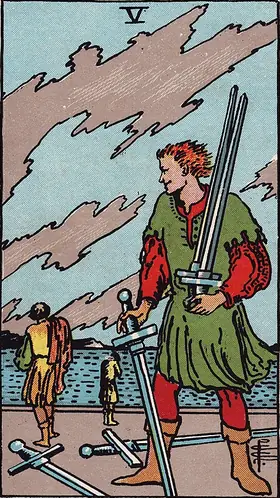
Under a jagged, cloudy sky, a man in the front of the picture gathers up swords: two rest on his shoulder and he holds a third, with a small smirk on his face. Two more swords lie on the ground. Behind him, two other people walk away toward the water, heads down, beaten. The wind has torn the clouds apart. He has won, and he has all the swords, but he stands alone. The picture asks what that victory is really worth.
Five of Swords upright
The Five of Swords marks the morning after a fight. Someone won, someone lost, and nobody feels good. It might be an argument where cruel things were said, a competition that turned nasty, or a family or work dispute where one side got its way.
You could be any person in the picture. As the man with the swords, you may have won the point but damaged trust, and the card asks whether being right was worth it. As one of those walking away, you may feel humiliated or outnumbered. Leaving can be the wise choice: some battles aren't yours to win.
The deeper message is about cost. Not every conflict needs a winner. Pride, the need to have the last word, or a wish to get even can turn a small disagreement into a lasting wound. The card asks you to pick your battles, choose fairness over scoring points, and let go of anything that would only feed more conflict.
Five of Swords reversed
Reversed, the fighting starts to wind down. Someone apologises, both sides decide it isn't worth it, or you simply walk away and stop replaying it. There may be regret about what was said, and that regret is useful: it shows you care about more than winning.
Sometimes the reversed card shows an old conflict that still stings. Making peace may not mean becoming friends again, but it can mean putting down your part of the fight. If you were the one who hurt someone, a simple, honest apology without excuses can do more than any argument. If you were hurt, you can choose to walk away from the battlefield without needing them to admit they were wrong. Moving on is a win nobody can take from you.
In love
Upright
In love, the Five of Swords shows arguments that leave both of you bruised: point-scoring, silent treatments, bringing up old mistakes. One of you may 'win' while the relationship loses. Ask what you are really fighting about, and whether you want to be right or close.
Reversed
Reversed, a couple is tired of fighting. It's a good time for an honest apology and a fresh, calmer conversation. Some couples make peace here; others agree to part without more damage. Either way, the goal is to stop the hurting.
How someone feels about you
If you ask how someone feels about you and the Five of Swords appears, things between you may feel tense or competitive. They might feel hurt by something you said, or defensive about something they did. Pride is getting in the way of softer feelings. The way forward starts with lowering your guard, not trying to win.
Career and work
Upright
At work, this card can show office politics, a colleague who takes credit, or a dispute where someone wins unfairly. Protect your work with clear records, stay professional, and avoid tactics you wouldn't be proud of. A reputation for fairness lasts longer than one victory.
Reversed
Reversed, tension at work eases. A dispute gets settled, or you decide to leave a toxic situation behind instead of fighting on. Look at what the conflict taught you about the people and the place, and take that lesson with you instead of the anger.
Money
Upright
With money, the Five of Swords can point to a dispute over who owes what, or a deal where someone came out ahead unfairly. Keep everything in writing. For a serious money disagreement, a qualified adviser or mediator can help.
Reversed
Reversed, a money conflict is ready to settle. A fair compromise may cost a little, but it saves a lot of stress. Let go of the need to come out on top, and focus on ending the dispute cleanly.
Yes or no
Leans no. The Five of Swords suggests that even if you get what you want, it may cost more than it's worth. It's a no to winning at any price.
The card's advice
Ask whether this fight is worth what it costs you. Sometimes the strongest move is to put the sword down and walk away.
Five of Swords in Starbound's spreads
The challenge
In The Bond, the Five of Swords as the challenge shows a pattern of fighting to win. One or both of you keep score, and every disagreement becomes a contest. The challenge is to stop treating each other as opponents and remember you are meant to be on the same side.
Two Paths: Path one: what it asks
In Two Paths, this card on the first path says that choice asks for a fight. You may get what you want, but it will mean conflict, and possibly hurting someone or your own reputation along the way. Weigh carefully whether the prize is worth that price.
A Quick Look: The situation
In A Quick Look, the Five of Swords as the situation shows the aftermath of a clash. Words were said, sides were taken, and the air hasn't cleared. Start by seeing your own part honestly, before deciding what to do about anyone else's.
Questions about Five of Swords
Which person in the Five of Swords represents me?
It depends on your situation. If you pushed hard to win, you may be the man collecting the swords. If you feel beaten or left out, you may be one of the people walking away. Either role can teach you something: about the cost of winning, or the wisdom of leaving.
Does the Five of Swords mean someone is against me?
It can show a rival or a conflict, but it isn't proof that someone is plotting against you. Often it reflects tension that everyone involved has added to. Rather than looking for an enemy, look for ways to calm the situation or step out of it.
Is the Five of Swords telling me to get even?
No. The card warns against exactly that. Getting even usually keeps the conflict going and leaves you holding swords nobody wants. Protect yourself, set clear boundaries, and let the fight end. Peace with yourself matters more than winning the last round.